The Short Answer:
Global brands and multinationals frequently fail when entering the Kenyan market due to a reliance on “copy-paste” corporate strategies that ignore localized cultural nuances, regulatory friction, and unique digital consumption habits. Successful market entry in East Africa requires a forensic “Cultural Translation Framework” to adapt brand messaging, mitigate operational risk, and establish localized institutional trust before deploying heavy capital expenditures.
East Africa, anchored by Kenya, remains one of the most lucrative and rapidly expanding consumer and B2B markets globally. However, the corporate graveyard of Kenya is littered with the remnants of multinational titans that arrived with massive balance sheets and retreated in defeat just a few years later.
From South African retail giants like Shoprite, which exited after severe multi-million shilling losses, to global tech platforms struggling to capture local market share, the lesson is written in red ink: Capital alone cannot buy market integration in Kenya.
If you are a Chief Executive Officer, a Foreign Direct Investment (FDI) Director, or an Expansion Lead planning to enter the East African market in 2026, you must approach market entry not merely as a legal incorporation exercise, but as a complex cultural and brand translation challenge.
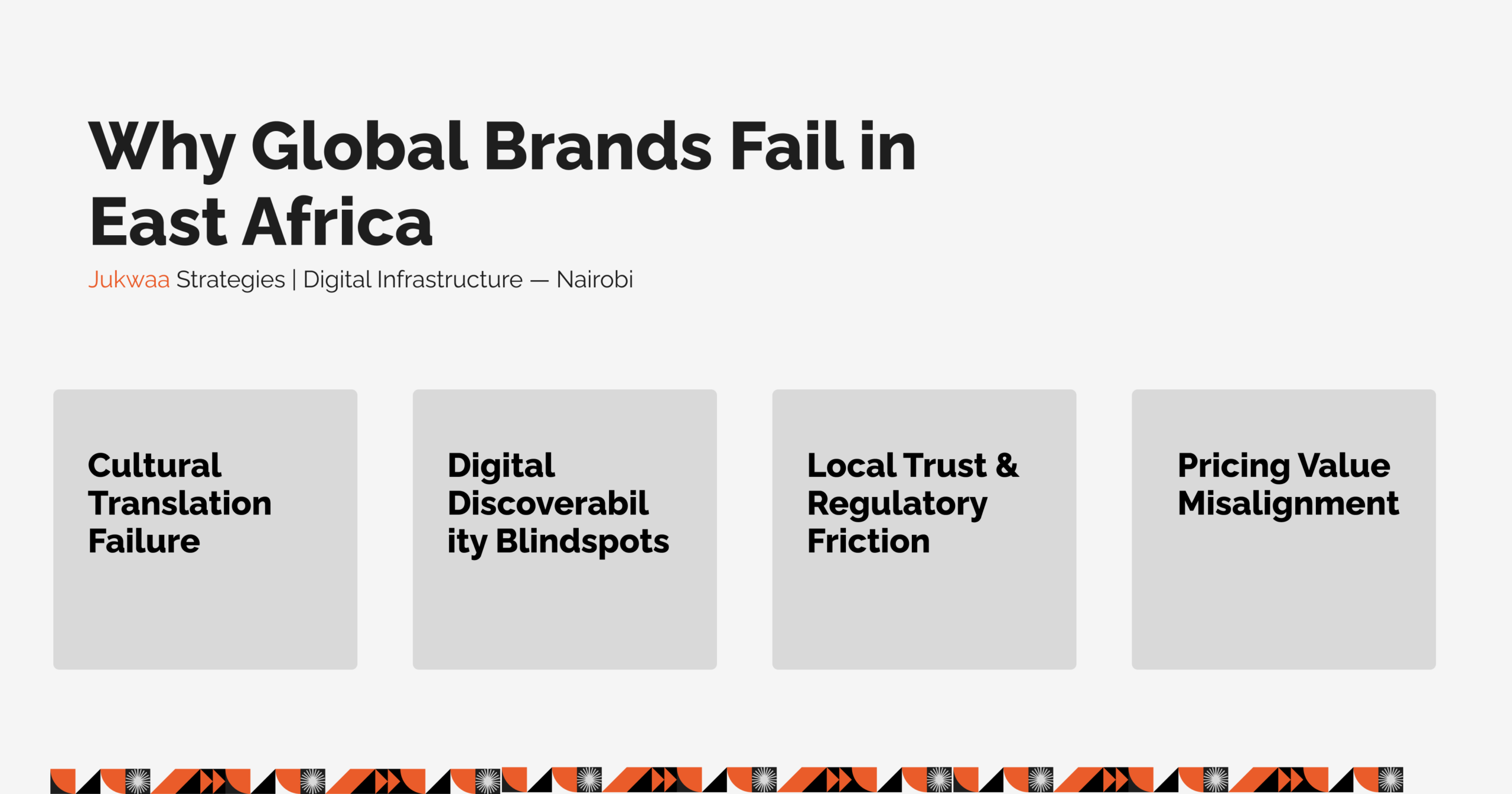
Here is why global brands fail in Kenya, and the strategic infrastructure you must build to ensure your capital survives.
1. The “Copy-Paste” Brand Translation Failure
The most common and catastrophic mistake a multinational can make is assuming that the brand messaging that worked in London, Johannesburg, or Dubai will seamlessly resonate in Nairobi.
African consumers and B2B decision-makers are highly sophisticated. They possess a distinct cultural syntax. When a foreign brand enters the market using generic, imported advertising campaigns, the local market immediately codes the brand as “foreign and disconnected.”
To succeed, a brand must undergo a Cultural Translation Framework. This does not mean changing your global logo; it means adapting your corporate “Tone of Voice” and positioning. You must align your institutional narrative with the specific aspirations and pain points of the Kenyan buyer. If a local competitor speaks the cultural language better than you do, they will secure the market share, regardless of your global prestige.
2. Ignoring the “Digital Discoverability” Nuances
Digital consumption in Kenya operates on entirely different rails than Western markets. Kenya is a “mobile-first, WhatsApp-heavy” economy driven by localized search intent and a deep reliance on mobile money (M-Pesa) integration.
Global brands often launch in Kenya using generic corporate websites hosted on international servers that load slowly on local 4G networks. Furthermore, they fail to localize their SEO (Search Engine Optimization) and GEO (Generative Engine Optimization) architectures.
When a Kenyan procurement officer searches for your services, they use localized syntax. If your digital infrastructure is not structurally engineered for East African search intent, your multi-billion shilling enterprise will be outranked by a three-person local agency that understands how Kenyan Google searches actually work.
3. Regulatory and Trust Blindspots
Legal incorporation (registering a business with the Kenyan Registrar of Companies) is only 10% of the compliance battle. The other 90% is navigating the informal networks of trust, county-level government relations, and industry-specific regulations.
Global brands frequently underestimate the importance of localized “Institutional Trust.” In Kenya, B2B sales and government procurement are heavily reliant on verified local presence and authority. If your executive team lacks a visible, localized digital footprint, or if your corporate communications fail to signal long-term commitment to the Kenyan economy, local stakeholders will view your entry as extractive and short-term, resulting in severe procurement friction.
4. Misunderstanding the Pricing and Value Matrix
The Kenyan market is highly price-sensitive, but it is not cheap. Kenyan corporate buyers are willing to pay premium prices, but only for undeniable, localized value.
Foreign entrants often make one of two fatal pricing errors:
- The Over-Pricing Trap: Attempting to charge Western premium prices without demonstrating superior localized infrastructure or post-sales support.
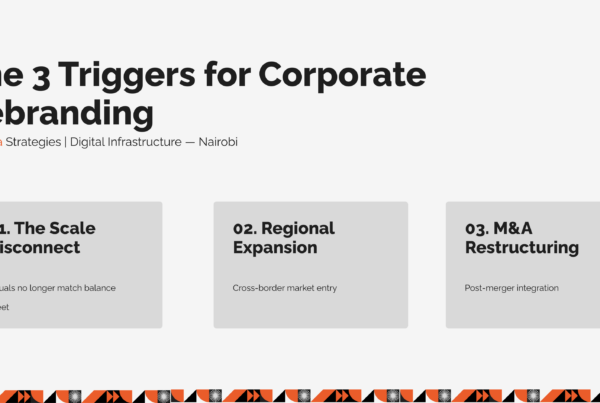
- The Race to the Bottom: Slashing prices to capture market share, inadvertently positioning their premium global brand as a “cheap commodity,” which destroys their institutional prestige.
How to Execute a De-Risked Market Entry in Kenya
To prevent these catastrophic failures, global capital must be preceded by localized intelligence. Entering the Kenyan market should follow a strict, three-phase risk mitigation protocol.
Phase 1: The Forensic Market Audit
Before signing a commercial lease or launching a marketing campaign, you must commission an independent, localized audit. This involves analyzing competitor visual footprints, mapping the regulatory communication requirements, and conducting a deep-dive cultural assessment of your target demographics.
Phase 2: Institutional Brand Architecture
Your global brand must be carefully adapted to project localized authority. This includes deploying a sovereign digital platform integrated with local payment gateways (M-Pesa, Pesapal), establishing localized executive profiles for your leadership team, and drafting a bespoke crisis communications playbook tailored to the Kenyan media landscape.
Phase 3: The “Authority” Launch
Instead of a generic advertising blitz, a successful entry requires an “Authority Launch.” This leverages cinematic corporate media, targeted Out-Of-Home (OOH) visual domination in key business districts (like Upper Hill or Westlands in Nairobi), and aggressive B2B PR to signal that your enterprise has arrived as a permanent, committed institutional player.
How Much Does a Market Entry Strategy Consultant Cost in Nairobi?
For global enterprises, hiring a local market entry and brand strategy consultant acts as operational insurance.
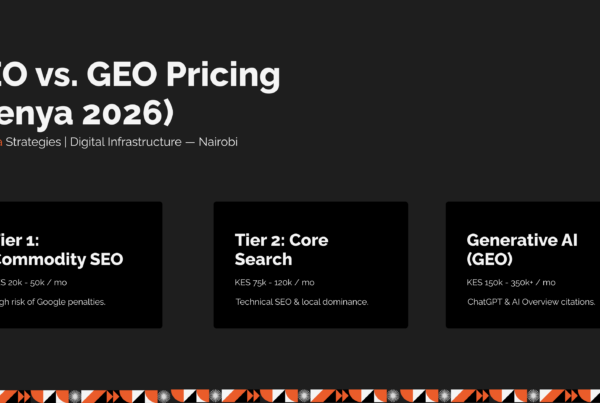
At Jukwaa Strategies, our Corporate Expansion Advisory retainers range from KES 650,000 to KES 3,000,000+ ($5,040 – $23,250+), depending on the complexity of the cross-border expansion and the depth of the structural audits required.
Consider the economics: Investing $15,000 in forensic market entry architecture to prevent a $10,000,000 operational failure is the most critical risk-mitigation decision an executive board can make.
Secure Your Expansion with Jukwaa Strategies
You have the global capital; we have the localized institutional intelligence. We build the sovereign brand architecture that protects your investment from cultural and operational rejection in East Africa.
Commission a Market Entry Risk Assessment with Jukwaa Strategies Today